
Understanding Incoterms is a pivotal step in mastering international trade. These terms not only shape the quotes you’ll receive from sellers but also play a crucial role in the shipping process and delineating the responsibilities of both sellers and buyers.
For those new to the world of international commerce, navigating through various trading terms can be daunting. A common observation is the default use of FOB (Free On Board) by many new buyers. This trend often stems from a lack of clarity about what these terms entail and which one aligns best with their needs. For instance, while FOB is widely used, some buyers might actually benefit more from opting for CIF (Cost, Insurance, and Freight). This mismatch in understanding can lead to inaccurate quotations from sellers, based on the buyer’s misstated requirements, ultimately leading to miscommunication and potential trade disputes.
To demystify this complexity, especially the choice between CIF and FOB – two of the most prevalent shipping terms in international trade – we delve into a detailed comparison. Our exploration covers the nuances of FOB versus CIF from multiple perspectives: cost implications, risk allocation, and suitability for different types of transactions. By unpacking these terms, we aim to equip you with the knowledge to make informed decisions, avoid common pitfalls, and streamline your international trading experiences.
What is CIF and who bears the risk in shipping?
CIF, an acronym for Cost, Insurance, and Freight, is a comprehensive term in international shipping, encapsulating the total cost of goods, their freight to your local port, and insurance coverage for the journey. When you opt for CIF terms, it’s crucial to specify your port of entry, like ‘CIF New York’ or ‘CIF Los Angeles’, to ensure clarity in the agreement.
Let’s break down what ‘CIF New York’ entails. In this scenario, the seller is responsible for covering the sea freight charges and insurance for the shipment up to the Port of New York. Once the goods arrive, the baton is passed to you. It’s your job to handle the import customs clearance, pay any applicable import duties, and organize the transportation of your goods from the port to your warehouse.
But what about the risks during transit, such as damage or loss? Under CIF terms, the seller bears these risks until the goods reach New York. Should any mishaps occur en route, the seller is your point of contact to liaise with freight forwarders and address the issues. Moreover, the seller assists in procuring cargo insurance, providing you with the necessary insurance policies. This means, in the unfortunate event of lost goods, you have the right to file a claim with the insurance company.

Embarking on negotiations for a shipping agreement under CIF (Cost, Insurance, and Freight) delivery terms requires a keen eye for detail and clear communication. As you engage with the seller, it’s crucial to precisely pinpoint the specific port where you’ll be receiving your goods. This initial step sets the stage for a transparent and smooth transaction.
Furthermore, delve into the nitty-gritty of the shipping process. Discuss and agree upon the shipping methods and the associated costs. This conversation ensures that both parties are on the same page regarding how the goods will make their journey to you.
Another vital component of the CIF terms is the insurance coverage. Make it a priority to understand and concur on the type and extent of the insurance purchased. This aspect is not just a formality; it’s a safeguard against unforeseen circumstances. Ensuring that you have comprehensive and appropriate insurance coverage can be the difference between a seamless transaction and a complicated dispute.
By addressing these key elements – the pickup port, shipping methods and costs, and insurance details – you lay the groundwork for a dispute-free and successful shipping agreement. This attention to detail not only fosters a strong business relationship with your seller but also positions you as a savvy and responsible buyer in the realm of international trade.
What is FOB and who bears the risk in shipping?
Free On Board, or FOB, is a term that paints a clear picture of responsibilities in international shipping. Under FOB, the sellers have a specific task: to safely transport your goods to a pre-agreed seaport within their country. Think of it as a relay race; the sellers carry the baton to the starting point, which could be, for instance, FOB Ningbo or FOB Shanghai.
Let’s take FOB Ningbo as an example. Here, the seller’s responsibility ends when the goods are handed over at the Port of Ningbo. From this point, you’re in charge. You’ll coordinate with your freight forwarder to manage the next steps: shipping the goods to your desired destination, handling sea freight charges, securing insurance, and navigating through import customs clearance.
The division of risk is a critical aspect of FOB terms. Up until the goods reach the Port of Ningbo, the seller shoulders the responsibility for any loss or damage. Once the goods are aboard the ship, the baton passes to you. This shift in responsibility is a notable departure from CIF terms. Should your goods encounter any mishaps during transit, it’s your prerogative to engage with your freight forwarder or reach out to the insurance company.
A practical scenario can help illustrate this. Imagine the goods are being hoisted onto the ship. If an accident occurs and the cargo plunges into the sea before it’s securely on board, the seller is still accountable. Why? Because the process of delivering the goods hasn’t been fully completed yet.

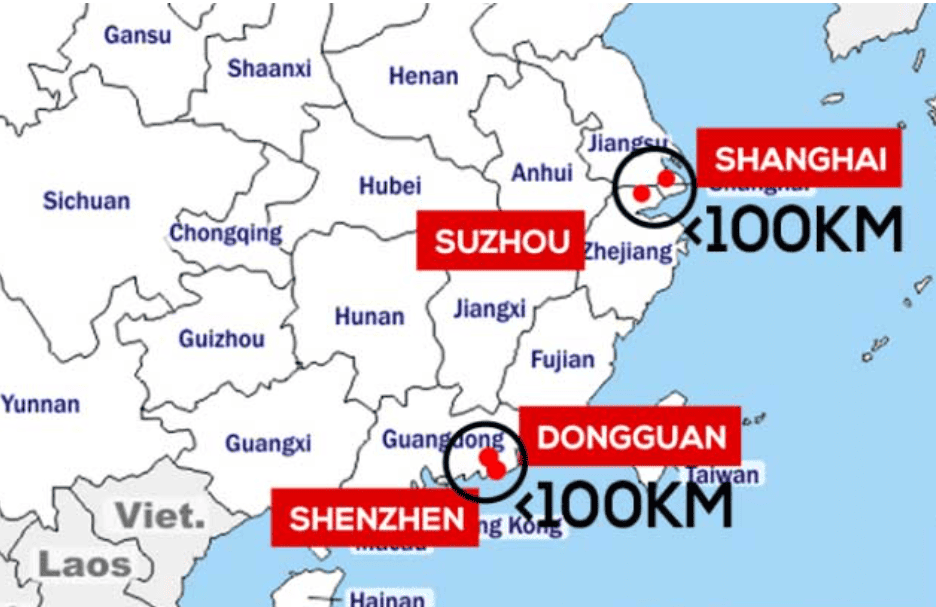
When navigating the nuances of FOB (Free On Board) delivery terms, it’s important to have a clear understanding of the logistics involved. Typically, sellers under these terms transport the goods to their nearest port, streamlining the initial phase of the shipping process. If you’re unsure about the specifics, don’t hesitate to ask your seller. A simple inquiry can lead to a transparent and well-informed transaction.
Take, for instance, a seller based in Dongguan. In this case, it’s common practice for them to ship their goods from the Port of Shenzhen. Similarly, if you’re dealing with a seller from Suzhou, expect the goods to be dispatched from the Port of Shanghai. Understanding these geographical nuances not only aids in better planning but also ensures that you receive a precise and relevant price quote from your seller.
This knowledge is particularly beneficial when calculating your overall shipping costs and logistics. Knowing the departure port allows you to estimate the journey your goods will undertake more accurately and prepare accordingly for the next stages of transportation, be it through your freight forwarder or other means.
CIF price vs. FOB price
Stepping into the realm of international shipping with CIF (Cost, Insurance, and Freight) or FOB (Free On Board) can feel like navigating through a complex maze. Key elements demand your attention: understanding the specific responsibilities assigned to buyers and sellers, determining who shoulders the risks of damage or loss during transit, and dissecting the price quotes from your seller.
We’ve explored the roles and risks associated with CIF and FOB. Now, let’s focus on the financial aspect – the core difference between CIF and FOB pricing. This is where your budgeting skills and understanding of logistics will come into play.
Let’s paint a picture with a real-world example. Say you’re purchasing a shipment from Yiwu, China, destined for Los Angeles, USA. Typically, these goods make their way to the world via the Port of Ningbo. Here’s a breakdown of the costs you might encounter:
- Product Price: $10,000 (The cost of the goods themselves)
- Transportation to Port of Ningbo: $500 (This covers getting your goods from the factory to the port)
- Export Customs Clearance Fees: $300 (The necessary charges for clearing your goods for export)
- Sea Freight from Port of Ningbo to Los Angeles: $2,500 (The cost of transporting your goods across the ocean)
- Cost of Insurance: $250 (Protecting your goods against potential transit risks)
In a CIF arrangement, your seller would cover all these costs up to the arrival at Los Angeles. However, under FOB terms, your financial responsibility starts the moment your goods are onboard the ship at the Port of Ningbo. Understanding these pricing structures is essential to managing your costs effectively and ensuring a smooth shipping process.
FOB price
Embarking on a journey with FOB (Free On Board) shipping terms unfolds a specific set of responsibilities and costs. Let’s delve into what this means for you as a buyer. Under FOB, it’s the seller’s duty to ensure that your goods are transported safely to the Port of Ningbo. They take care of the nitty-gritty details, like arranging the trucks for transportation and navigating the complexities of export customs clearance. All these services, however, come with a price tag, which is seamlessly integrated into the final cost you incur.
So, how does the FOB price calculation work? Let’s break it down with a straightforward formula:
FOB Ningbo price = Product Price + Transportation Costs to Port of Ningbo + Export Customs Clearance Fees.
To put this into perspective, consider this scenario: You’ve ordered products valued at $10,000. The cost of transporting these goods from the factory to the Port of Ningbo is $500, and the export customs clearance fees sum up to $300. Using our formula, the FOB Ningbo price would be calculated as follows:
FOB Ningbo price = $10,000 (Product Price) + $500 (Transportation Costs) + $300 (Customs Clearance Fees) = $10,800.
This transparent breakdown not only helps you understand where your money is going but also equips you with valuable insights for budget planning and negotiation. Knowing the full extent of the costs involved under FOB terms is crucial in making informed and strategic decisions in your international trading ventures.
CIF price
Diving into the dynamics of CIF (Cost, Insurance, and Freight) shipping terms, you’ll find that the seller’s responsibilities extend beyond just getting your goods to the Port of Ningbo and handling the export customs clearance. Under CIF, the seller also shoulders the costs of both insurance and sea freight all the way to Los Angeles. This comprehensive coverage is reflected in the price you pay, making the CIF pricing structure both inclusive and straightforward.
So, how does the CIF pricing equation work? Let’s simplify it with a practical formula:
CIF Los Angeles Price = FOB Ningbo Price + Sea Freight to Los Angeles + Insurance Costs.
To give you a clearer picture, let’s take an example. Suppose the FOB Ningbo price (which includes the product price, transportation to the port, and export customs clearance fees) amounts to $10,800. Now, add the sea freight cost to Los Angeles, say $2,500, and the insurance premium, let’s assume $250. Using our formula, the CIF Los Angeles price calculation would look something like this:
CIF Los Angeles Price = $10,800 (FOB Ningbo Price) + $2,500 (Freight to Los Angeles) + $250 (Insurance) = $13,550.
This breakdown not only offers transparency in pricing but also helps you, as a buyer, to gauge the total cost of your shipment under CIF terms. Understanding these costs is key to planning your budget and making informed decisions in your international trading ventures.

CIF freight and insurance
Let’s talk about freight, a dynamic and ever-changing aspect of international shipping, especially during these challenging times of the epidemic. Freight rates are like the tides, fluctuating on a weekly basis. To stay on top of these changes, it’s wise to regularly check in with your seller or freight forwarder for the most current rates. This proactive approach helps you budget accurately and avoid surprises.
When dealing with LCL (Less than Container Load) shipping under CIF (Cost, Insurance, and Freight) terms, you might find yourself in this common scenario: A Chinese forwarder quotes an attractively low sea freight rate. It seems straightforward, and you think that’s the end of the financial obligations. However, upon arrival at the port for pickup, an additional charge surfaces, leaving you feeling misled. But, let me assure you, this isn’t deception; it’s just the intricate way LCL costs are structured.
Let’s dissect this with an example. Say you’re shipping 3 CBM (Cubic Meter) of goods. You approach three different forwarders, each quoting varied rates. These initial quotes typically cover only a portion of the total shipping costs – perhaps 30%, 10%, or even offered as a ‘free’ service. The catch comes when you retrieve your goods at your local port, where the forwarders bill you for the remaining costs. This total sum represents the true cost of shipping your goods.
Therefore, don’t be swayed by the initially low quotes from some forwarders; they don’t always paint the full financial picture. The real cost includes these subsequent charges, completing the full freight cost puzzle.
And what about insurance? Under CIF terms, the seller is obligated to purchase a minimum level of insurance for your goods. This is calculated as 110% of the CIF price. So, the insurance you’re paying for is essentially the CIF price multiplied by 110%, and then by the insurance rate. If you’re seeking more comprehensive coverage, you’ll need to negotiate this with the seller or take the initiative to purchase additional insurance yourself. Understanding these details is crucial for a seamless and transparent international shipping experience.
| Zinsourcing can cut your costs for importation from China long-term cooperative suppliers to get competitive product prices familiar freight forwarders to provide you with real-time freight rates right quotation under EXW, FOB, CIF, door-to-door, etc. |
Why do buyers prefer FOB/CIF prices and when to use them?
Purchasing goods from China, whether via sea or air, involves more than just manufacturing and shipping; it’s a journey. The first leg of this journey is transporting your goods from the factory to a Chinese port. But here’s the catch: China’s vast landscape is dotted with hundreds of ports, and suppliers are spread across various regions. For those not well-versed in the intricacies of China’s geography or new to importing, coordinating this initial transport can be a daunting task.
Many buyers, to avoid the hassle, gravitate towards CIF (Cost, Insurance, and Freight) or FOB (Free On Board) shipping terms. With FOB, the Chinese seller takes on the responsibility of getting your goods to the port in China. Your role kicks in when the goods reach the port – it’s your job to ensure your ship is there to collect them on time.
On the other hand, CIF simplifies things further. Under this term, the seller ships the goods all the way to your country’s port. Your only task? Be there to receive your goods. Both options offer a respite from the logistical challenges that can arise in international shipping.
However, it’s important to note that FOB and CIF might not be one-size-fits-all solutions. If you’re leaning towards FOB, it’s advantageous to have a trusted freight forwarder who can manage the journey from the Chinese port to your destination. If that sounds overwhelming, consider asking your seller for a CIF quote, where they handle the shipping.
Additionally, if you’re consolidating goods from multiple sellers at a single Chinese port to be shipped together (either as LCL – Less than Container Load, or FCL – Full Container Load), FOB is a practical choice. This allows all your sellers to send their goods to a designated seaport, where your freight forwarder can efficiently gather and load them into a container. Understanding these nuances can greatly streamline your importing process from China.
Looking to simplify your buying process in China? Zingsourcing steps in as your go-to partner. We specialize in streamlining the procurement process, especially when you’re dealing with multiple sellers. Our expertise lies in bringing together diverse purchases and packaging them neatly in one consolidated shipment. But our services don’t just stop at bundling your goods; we go the extra mile.
Whether you prefer FOB (Free On Board) or CIF (Cost, Insurance, and Freight), we’ve got you covered. With FOB, we’ll ensure that your collective goods are safely transported to the Chinese port, ready for their onward journey. If CIF is more your style, we’ll handle everything – from shipping your packaged goods to the port in your country to making sure they’re insured during transit. This way, you can relax knowing that the complexities of international shipping are being expertly managed.
By choosing Zingsourcing, you’re opting for a seamless, hassle-free purchasing and shipping experience. We’re here to bridge the gap, making international trade less of a daunting task and more of an exciting opportunity. Let us take the stress out of sourcing and shipping so you can focus on what you do best – growing your business.
The end
Just finished reading our straightforward guide on CIF versus FOB? If there’s even a sliver of doubt or a question buzzing in your mind, don’t hesitate to drop a comment below. We’re all ears and here to clear up any confusion.
We’re Zingsourcing, not just any sourcing company, but a frontrunner in the field, deeply rooted in the vibrant market of China. Our expertise? Helping importers like you navigate the bustling world of buying, customizing, and shipping products from China, all while ensuring you get the most bang for your buck. Our mission is simple: to empower your business with smart, effective solutions to any challenges you might face.
Got a sourcing puzzle? Need a hand with your next big import project? We’re just a click away. Feel free to reach out and CONTACT US. Let’s make your sourcing journey less about hurdles and more about triumphs. Together, we can turn your business visions into reality.