
Baking paper, also known as baking paper or oiled paper, is a non-sticky, heat-resistant paper specifically used in the baking process. Its main function is to prevent food from adhering to the baking dish or baking sheet, thus simplifying the baking process and facilitating cleaning. Baking paper is usually made from refined wood pulp and is treated with special treatments, such as silicone oil coating, to improve its non-stickiness and heat resistance. This paper can be used at high temperatures, suitable for baking cookies, bread, cakes and other baked goods. It can also be used for layered storage of food to prevent adhesion between foods. Baking paper is one of the indispensable tools in the modern kitchen, popular for its practicality and convenience.
1. What is Parchment Paper Made of?

Parchment paper, which is often used in baking and cooking, is made from cellulose fibers derived from wood, cotton, or flax plants. Unlike traditional parchment made from animal skins, modern parchment paper is treated with an acid during the manufacturing process to make it heat-resistant and non-stick. This treatment typically involves coating the paper with silicone, which provides it with its non-stick, heat-resistant properties, making it ideal for lining baking sheets and pans to prevent sticking and for wrapping foods for cooking. Parchment paper is a popular choice in kitchens due to its versatility and convenience.
2. Are Parchment Papers Safe to Use?
Yes, parchment papers are generally safe to use in cooking and baking. Here are some key points regarding their safety:
- Heat Resistance: Parchment paper is treated to withstand high temperatures, usually up to around 420-450°F (215-230°C). This makes it suitable for most baking tasks.
- Non-Toxic: The silicone coating on parchment paper is non-toxic and inert, so it won’t leach chemicals into your food during cooking or baking.
- Non-Stick Surface: The non-stick nature of parchment paper means that there is less need for additional greasing, which can be healthier.
- Prevents Burning or Sticking: It helps in even baking and prevents the bottom of baked goods from burning or sticking to the pan.
- Microwave Safe: Most parchment papers are also safe to use in the microwave.
However, it’s important to use parchment paper correctly to ensure safety:
- Avoid High Temperatures Beyond Its Limit: Don’t use parchment paper at temperatures higher than recommended by the manufacturer, as it can become a fire hazard.
- Do Not Use Under Broiler: Parchment paper should not be used under a broiler or in direct contact with an oven’s heating element.
- Check for Quality: Use good quality parchment paper from a reputable brand to ensure safety standards.
when used within its intended temperature range and guidelines, parchment paper is a safe and convenient tool in the kitchen.
3. What is Parchment Paper Used for?
Parchment paper is a versatile kitchen tool with several uses, especially in baking and cooking. Here are some of the common uses:
- Lining Baking Sheets and Pans: It’s often used to line baking sheets and cake pans to prevent sticking and to facilitate easy cleanup. It’s especially useful for baking cookies, pastries, and breads.
- Baking Wraps for Fish and Chicken: Parchment paper can be used to wrap fish, chicken, or vegetables for baking. This method, known as “en papillote,” allows food to steam in its own juices and results in moist, flavorful dishes.
- Rolling Out Dough: It can be used as a non-stick surface for rolling out dough, preventing the dough from sticking to the work surface or rolling pin.
- Layering: To prevent items like burgers or baked goods from sticking together, parchment paper can be placed between them when storing or freezing.
- Covering Dishes While Baking: It can be used to cover dishes in the oven to prevent the top of a dish from burning or browning too much.
- Piping Bags: Homemade piping bags for icing can be made out of parchment paper.
- Crafting and Decorating: Beyond cooking, it’s also used in various crafting and decorating projects, given its semi-translucent and heat-resistant properties.
- Microwave Cooking: Parchment paper is microwave-safe and can be used to cover dishes to prevent splattering without trapping too much steam.
- Shelf Liner: It’s sometimes used as a liner for kitchen shelves or drawers for easy cleaning and protection against spills or stains.
Parchment paper’s non-stick, heat-resistant qualities make it a very useful item in the kitchen, helping to make both cooking and cleanup more efficient.
4. Silicone vs Quilon Coated Parchment Papers
Silicone and Quilon are two different types of coatings used on parchment paper, and they have distinct characteristics:
Silicone-Coated Parchment Paper
- Material: This parchment paper is coated with silicone, a synthetic polymer that is heat-resistant and non-stick.
- Safety and Heat Resistance: Silicone-coated parchment paper is safe for oven use at high temperatures, typically up to around 420-450°F (215-230°C). It doesn’t release harmful fumes or react with food.
- Non-Stick Quality: It provides an excellent non-stick surface, ideal for baking cookies, breads, and pastries, as well as for roasting and freezing foods.
- Reusability: Silicone-coated parchment can often be reused multiple times, depending on the baking temperature and duration.
- Environmental Impact: Silicone is considered a more eco-friendly option as it can be recycled, although recycling facilities for silicone are not as widespread.
Quilon-Coated Parchment Paper
- Material: Quilon is a chemical that contains chromium, which gives the parchment paper its non-stick properties.
- Safety and Heat Resistance: Quilon-coated parchment paper is also heat-resistant, but it may not withstand as high temperatures as silicone-coated parchment. It’s generally safe for typical baking temperatures.
- Non-Stick Quality: It offers a non-stick surface, though some argue it’s not as effective as silicone.
- Reusability: Quilon parchment is typically single-use and not as durable for multiple baking sessions.
- Environmental and Health Concerns: The chromium in Quilon can raise environmental and health concerns. When incinerated, it may release toxic chromium compounds. It’s less environmentally friendly compared to silicone.
- Silicone-Coated Parchment Paper is more heat-resistant, durable, and eco-friendly, making it a preferred choice for frequent bakers and those concerned about environmental impact.
- Quilon-Coated Parchment Paper is often less expensive but may have environmental and health concerns due to the chromium content, and it’s generally less durable.
When choosing between the two, consider your specific baking needs, frequency of use, and environmental concerns.
5.Bleached vs Unbleached Parchment Paper
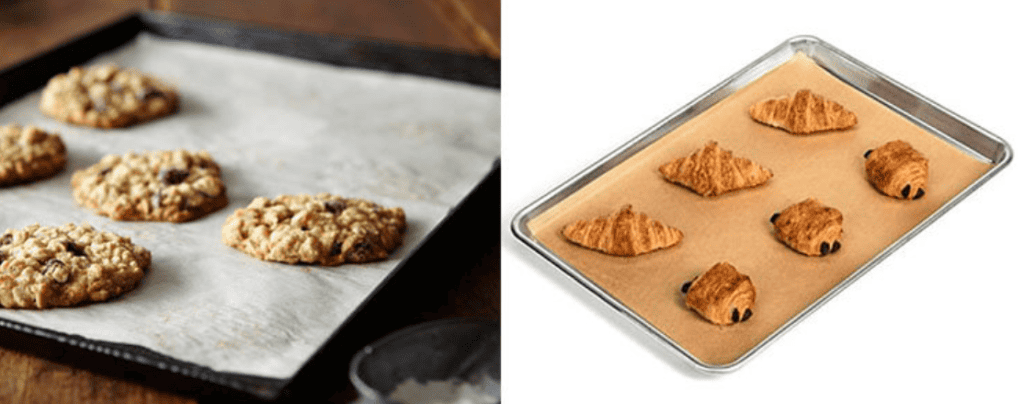
Bleached and unbleached parchment paper are two varieties of parchment paper, differing mainly in their treatment and appearance:
Bleached Parchment Paper
- Color: Bleached parchment paper is white, as it has been treated with chlorine to remove its natural color.
- Chemical Process: The bleaching process involves chemicals, which some people may prefer to avoid, especially if they are concerned about potential chemical residues.
- Performance: In terms of non-stick properties and heat resistance, bleached parchment paper performs similarly to unbleached parchment. It’s suitable for a wide range of baking and cooking applications.
- Aesthetic: Some bakers prefer the clean, white appearance of bleached parchment for presentation purposes.
Unbleached Parchment Paper
- Color: Unbleached parchment paper has a natural, brown color, as it hasn’t been treated with chemicals to alter its appearance.
- Chemical-Free: It’s often preferred by those looking for a more natural product, as it avoids the use of chlorine for bleaching.
- Performance: Like its bleached counterpart, unbleached parchment paper is non-stick and heat-resistant, making it suitable for various baking needs.
- Environmental Aspect: Unbleached parchment is often seen as more environmentally friendly, as it skips the chemical treatment process.
Key Considerations
- Health and Environment: If you’re concerned about chemical exposure or wish to make more environmentally friendly choices, unbleached parchment paper might be the better option.
- Functionality: Both types perform similarly in baking and cooking, so your choice may come down to personal preference or specific health and environmental considerations.
- Aesthetics: The choice might also depend on your aesthetic preference for your baking projects.
the primary differences between bleached and unbleached parchment paper lie in their manufacturing process and appearance, with minimal difference in their functionality in the kitchen.
6. 2 Certificates Needed for Food-grade Parchment Paper
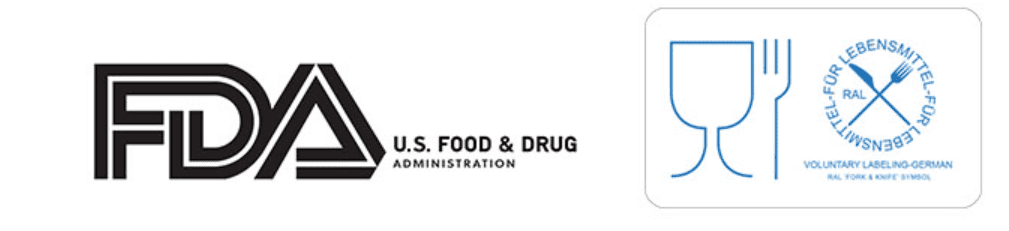
These certifications help ensure that the parchment paper is safe for its intended use, produced under good manufacturing practices, and environmentally responsible. When purchasing parchment paper, especially for commercial use, it’s beneficial to look for these certifications to ensure compliance with safety and environmental standards.
For food-grade parchment paper to be considered safe and suitable for use in cooking and baking, it typically needs to adhere to certain standards and certifications. Two important certificates often associated with food-grade parchment paper are:
- FDA Approval (U.S. Food and Drug Administration):
- This certifies that the parchment paper is safe for food contact and doesn’t contain any substances that could be harmful to health when used as intended.
- In the United States, the FDA sets regulations for food contact materials, ensuring they are safe for use in food preparation and storage.
- FDA approval is crucial for any food-related product sold in the U.S. market, as it assures consumers of the product’s safety.
- FSC Certification (Forest Stewardship Council):
- While not directly related to food safety, FSC certification is important for environmental sustainability.
- This certification ensures that the paper products come from responsibly managed forests that provide environmental, social, and economic benefits.
- FSC certification is a mark of responsible forestry practices, which is increasingly important for consumers concerned about the environmental impact of the products they use.
Other certifications may also be relevant depending on the region and specific use of the parchment paper:
- ISO Certifications: These can include various standards for quality management, environmental management, and safety.
- Compliance with EU Regulations: In Europe, similar to FDA approval in the U.S., there are specific regulations for materials intended to come into contact with food.
- BFR Recommendation (German Federal Institute for Risk Assessment): This can be relevant for products sold in Europe, ensuring the product is free from substances that could pose a risk to health.
7. Where Can You Use Parchment Papers Over Silicone Baking Mats?
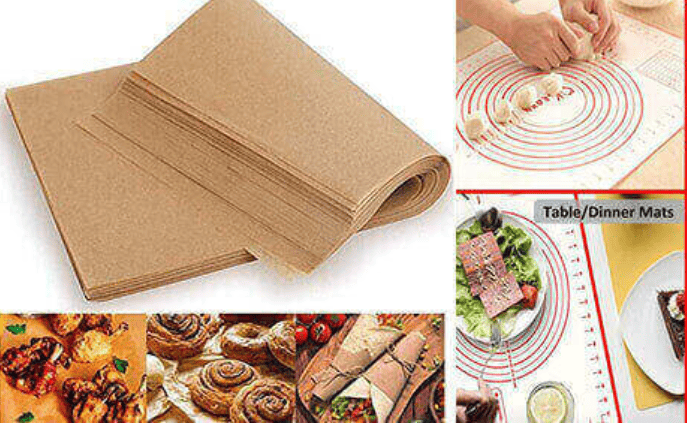
Parchment paper and silicone baking mats are both popular in the kitchen, but they have different ideal uses due to their distinct characteristics. Here’s where parchment paper might be preferred over silicone baking mats:
Situations Favoring Parchment Paper
- High-Temperature Baking: Parchment paper is generally safe up to temperatures of around 420-450°F (215-230°C), making it suitable for recipes that require high heat, where a silicone mat might degrade.
- Disposable and Convenient: For quick clean-up and when you don’t want to clean a mat after use, parchment paper is disposable and often a more convenient choice.
- Acidic or Sugary Foods: Silicone mats can degrade over time when exposed to highly acidic or sugary foods, whereas parchment paper can handle these without issue.
- Infrequent Use or Small Quantities: If you bake infrequently or in small quantities, disposable parchment paper might be more practical than investing in a reusable silicone mat.
- En Papillote Cooking: Cooking “en papillote” (wrapped in parchment) is a technique where food is steamed inside a folded pouch – a method not possible with a silicone mat.
- Crafting and Freezing: Parchment paper is useful for crafting projects or for separating items like burgers or cookies before freezing. It’s more flexible for wrapping or layering than a silicone mat.
- Specific Recipes: Certain recipes, like meringues or dried fruits, work better on parchment paper due to its absorbent qualities.
- Pre-cut or Precise Sizes: Parchment paper can be easily cut or bought in pre-cut sizes to fit specific pans, which is not possible with silicone mats.
General Considerations
- Environmental Impact: While parchment paper is disposable, silicone baking mats are reusable and may be more environmentally friendly in the long run.
- Cost Over Time: Silicone mats can be more cost-effective over time, as they are reusable, whereas parchment paper is a recurring expense.
parchment paper is often chosen for its convenience, disposability, and versatility in specific cooking and baking situations, as well as for certain recipes where its unique properties are advantageous.
FAQs
Sure, I can help you with a list of Frequently Asked Questions (FAQs) about parchment paper. Here are some common questions and their answers:
- What is parchment paper?
- Parchment paper is a heat-resistant, non-stick baking paper made from cellulose and often used in baking and cooking.
- Is parchment paper the same as wax paper?
- No, parchment paper is different from wax paper. Parchment is heat-resistant and can be used in the oven, whereas wax paper is not heat-resistant and will melt or ignite at high temperatures.
- Can parchment paper be reused?
- Yes, parchment paper can often be reused several times, depending on the baking temperature and how much it’s been exposed to moisture or grease.
- Is parchment paper environmentally friendly?
- Unbleached parchment paper is more environmentally friendly compared to bleached. Silicone-coated parchment paper is also a better choice from an environmental standpoint than Quilon-coated ones.
- Can parchment paper go in the microwave?
- Yes, parchment paper is microwave-safe. It doesn’t contain any metals or harmful substances that could react in a microwave.
- Is it safe to bake with parchment paper?
- Yes, it’s safe to bake with parchment paper up to the temperature limit specified by the manufacturer, usually around 420-450°F (215-230°C).
- Can parchment paper catch on fire?
- Parchment paper can burn if exposed to very high temperatures or direct flames. It’s important to use it within the recommended temperature range.
- What’s the difference between bleached and unbleached parchment paper?
- Bleached parchment paper is chemically treated to be white, while unbleached parchment retains its natural brown color and doesn’t undergo chemical bleaching.
- Can parchment paper be composted?
- Unbleached parchment paper is generally compostable. However, bleached parchment and papers coated with silicone or Quilon might not be compostable due to their chemical treatments.
- How do you store parchment paper?
- Store it in a dry place away from direct sunlight and moisture to maintain its quality.
These FAQs cover some of the basic and most common questions about parchment paper. If you have more specific inquiries, feel free to ask!
The End
If you think this article is helpful for you, share it with your friends or on Facebook, Reddit, Quora. If you have other questions, please leave messages so that I can help you.
We’re Zingsourcing, a leading sourcing agent in China. If you want to wholesale safe parchment paper, please feel free to CONTACT US.