
China is responsible for manufacturing nearly 60% of the world’s apparel, with renowned designer brands such as Burberry, Armani, and Prada utilizing OEM factories in the country. The appeal of Chinese clothing manufacturers lies in their combination of cost-effective labor and progressively improving product quality.
This article will delve into the nuances of China’s garment industry and offer insights into the process of importing clothing from China. I’m confident that you’ll find this information extremely useful.
1. Analysis of Garment Industry in China
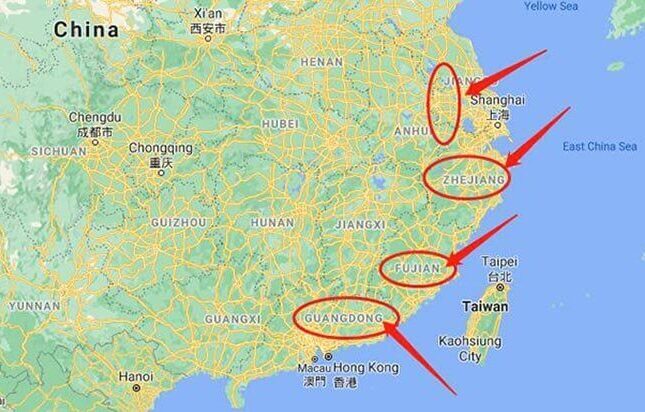
China’s clothing industry is predominantly centered in the regions of the Yangtze Delta and Pearl River Delta. For those looking to import apparel from China, it’s advisable to partner with suppliers based in these industrial hubs. But why is this recommendation so pertinent?
There are three primary benefits to sourcing wholesale clothing from factories situated in these Chinese industrial clusters:
Lower purchasing costs
China’s huge labor pool is another key support for the huge production capacity of its garment manufacturing industry. China has a rich skilled workforce that can meet a variety of complex and sophisticated manufacturing needs. These workers are not only superior in numbers, but also competitive in skills and experience. The overall cost of working with a Chinese garment manufacturer is lower.
Moreover, there are many similar manufacturers in the same area, and you can have more price choices and choose more competitive ones.
More advanced equipment
In recent years, China’s garment manufacturing industry has also been constantly introducing new technologies, such as automation, smart manufacturing and data analysis, to improve production efficiency and product quality. The application of these technologies helps to increase production speed, reduce costs, and meet the market demand for high-quality products.
High efficiency to customize
Working directly with manufacturers in China can streamline the process, particularly when customization is required. Chinese wholesale clothing manufacturers often have dedicated research and development teams. This means you can communicate your product ideas directly to them, allowing for efficient design and production.
On the other hand, collaborating with trading companies involves an additional step. You communicate your ideas to the trading company, which then relays them to the clothing factories. This extra layer can lead to time-consuming negotiations over product details and potential misinterpretations of the design.
Furthermore, I have categorized the clothing industrial clusters in China as shown in the chart below. This information will assist you in determining whether a factory you find online is located within one of these prominent clothing clusters.
| Clothes category | The main industrial cluster distribution |
|---|---|
| Men’s apparel | Zengcheng; Guangzhou; Hangzhou |
| Women’s apparel | Guangzhou; Humen; Hangzhou |
| Children’s apparel | Guangzhou; Hangzhou; Changshu |
| Wedding Apparel | Suzhou; Xiangcheng; Jinchang |
| Underwear | Hangzhou; Foshan; Nanhai |
| Shirt | Puning; Yiwu; Shaoxing |
| Leather apparel | Haining; Xinji |
| Cowboy wear | Xintang; Changzhou; Zhongshan |
| Woolen sweater | Dongguan; Tongxiang |
| Down coat | Gaoyou; Changshu; Hangzhou |
| Trousers | Quanzhou; Shishi; Guangzhou |
| Sportswear | Shishi; Xiamen; Guangzhou |
| Swimsuit | Jinjiang; Xingcheng; Yiwu |
| Replica clothing | Guangzhou; Humen; Dongguan; Putian |
| Note: I have highlighted the leading districts for each category. While numerous other industrial clusters are spread throughout China, the primary focus is on the provinces of Jiangsu, Zhejiang, Guangdong, and Fujian. |
2. Where to Find China Clothing Manufacturers?
Regarding the search for clothing manufacturers in China, you have several options to consider. The best approach can be chosen based on the specific needs and nature of your business.
- Chinese wholesale websites
- Sourcing agent
- Trade fairs
- Industrial clusters/China wholesale markets
Chinese Wholesale Websites
If you’re working with a tight budget or operating an e-commerce store, the optimal method to locate Chinese clothing manufacturers is through Chinese wholesale websites.
Popular platforms for this purpose are Alibaba, DHgate, AliExpress, Made in China, Global Sources, among others. Here, I’ll focus on two specific platforms: Alibaba and DHgate.
Alibaba
Alibaba stands as one of China’s most extensive B2B e-commerce platforms, offering a wide range of clothing at highly competitive prices. It’s an excellent destination for those seeking custom clothing manufacturers in China.
However, it’s important to note that many trading companies on Alibaba may present themselves as factories. To discern the true nature of a supplier, here are two methods to verify whether they are a factory or a trader.
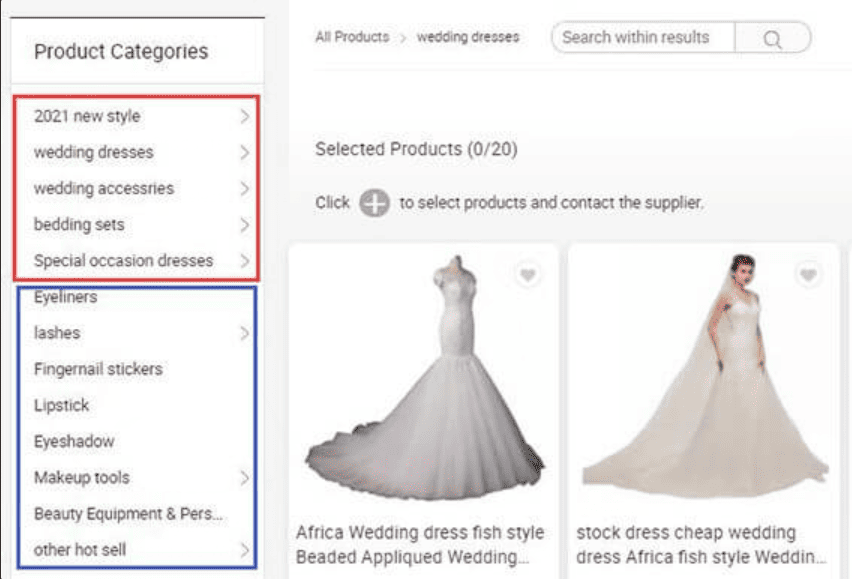
Firstly, if a supplier specializes exclusively in a specific category, it’s likely they are a clothing manufacturer. For instance, if a website showcases only wedding clothes or solely beauty products, it indicates specialization. Conversely, if a supplier’s website, like the one pictured below, displays a diverse range of products including both wedding clothes and beauty products, it’s more indicative of a trading company than a factory.
Additionally, the majority of clothing manufacturers on Alibaba typically establish a high Minimum Order Quantity (MOQ) to secure their profitability. In contrast, traders often offer a much lower MOQ, sometimes as few as just a few dozen, for products they have in stock.
DHgate
For those seeking to source smaller quantities from Chinese clothing manufacturers, DHgate is an appropriate platform to consider. This website hosts numerous Chinese clothing factories, and the MOQ requirements on DHgate are generally lower compared to Alibaba. It’s advisable to familiarize yourself with some safe buying practices before using DHgate.
| Tips:Regardless of the wholesale platform you opt for, there’s always the opportunity to negotiate with suppliers regarding pricing. Typically, purchasing in larger quantities leads to more competitive prices. |
Sourcing Agent
Besides the mentioned online platforms, another viable option is to work with a China sourcing agent. You can locate these agents through Google searches or on freelancing websites such as Upwork and Fiverr.
Sourcing agents offer the advantage of connecting you with a broader range of Chinese clothing manufacturers, some of which may not be readily accessible on wholesale websites. They can assist in managing the production process, ensuring product quality, and coordinating shipment arrangements.
Additionally, sourcing companies are typically adept at sourcing and customizing standard clothing styles with simple designs, as creating and producing an entirely new fashion style can be both costly and time-intensive.
At Zingsourcing, a premier sourcing company, we possess an extensive network of clothing factory resources. Our expertise allows us to assist you in sourcing and customizing a variety of clothing items, including staples like T-shirts, hoodies, and jackets, as well as specialized apparel such as sportswear, underwear, leggings, and more.
Industrial Clusters / China Wholesale Markets
Should you travel to China, consider touring the clothing industrial clusters. In the previous chapter, I detailed the locations of these clusters and their areas of specialization, allowing you to choose the one that best suits your needs. In addition to visiting the clothing factories directly, you’ll also find numerous wholesale markets within these industrial clusters.
Notably, the most extensive wholesale clothing markets in China are primarily located in Guangdong Province. The clothing markets in Guangzhou are especially renowned, being the largest in scale across the nation. Many suppliers in clothing markets of other cities source their products from these Guangzhou markets.
Below are some markets to buy wholesale clothing from China:
- Thirteen Hong Market (十三行)
- Shahe Market (沙河)
- Baima Market (白马)
- Jindu Clothing Wholesale City (锦都服装批发城)
- Sungang Taoyuan Foreign Trade Clothing City (笋岗桃园外贸服装城)
Furthermore, for those interested in purchasing clothing at reduced prices, exploring the surplus markets is a great option. I will cover some of these markets in part 5 of this blog.
Trade Fairs
If your schedule and budget allow, attending Chinese trade fairs is highly recommended. These fairs provide an opportunity for face-to-face interactions with Chinese clothing suppliers, aiding in better assessment of their ability to meet your specific needs.
Typically, suppliers who participate in these fairs are seasoned professionals, and you’ll often encounter clothing factories that don’t maintain an online e-commerce presence.
The Canton Fair is particularly noteworthy. It is held biannually and is divided into three phases. Chinese wholesale clothing suppliers usually participate in the third phase, which typically occurs every May and November.
3. How to Customize Clothing with China Manufacturers?
To customize clothing with Chinese manufacturers, you can follow these steps:
- Research and Select Suppliers: Start by researching and selecting appropriate manufacturers through online platforms (like Alibaba, DHgate, etc.) or by attending trade fairs. Focus on those that specialize in the type of clothing you need.
- Communicate Design and Requirements: Discuss your design needs with the manufacturer. This includes the style, material, color, size, etc., of the clothing. Prepare detailed design sketches or product specifications to ensure the manufacturer understands your requirements.
- Sample Production and Approval: Request the manufacturer to produce a sample before beginning mass production. This is a crucial step to check the quality, accuracy of design, and functionality. Provide feedback for any necessary adjustments.
- Negotiate Price and Terms: Negotiate with the manufacturer on the price, minimum order quantity (MOQ), production lead time, payment terms, etc.
- Sign a Contract: Once an agreement is reached, sign a formal contract. Ensure that all details, including quality standards, delivery times, and payment conditions, are clearly listed in the contract.
- Production Follow-Up and Quality Control: Maintain communication with the manufacturer during the production process to monitor progress and quality. You may need to hire a third-party inspection company to ensure product quality.
- Logistics Arrangement: Coordinate with the manufacturer or a third-party logistics company to arrange the shipping and delivery of the products.
By following these steps, you can effectively collaborate with Chinese clothing manufacturers to customize garments that meet your needs.
4. Where to Buy the Cheapest Clothes in China?
You might find it intriguing to learn that in China, some suppliers sell clothing by weight, a practice quite common there. China boasts four well-known surplus stock markets. For anyone interested in purchasing affordable clothing, I highly recommend exploring these markets.
Yiwu Wuai Leftover Stock Market
It is located in Yiwu, the number of inventory stores here is the largest in China.
Yiwu Mehu Leftover Stock Street
It is also located in Yiwu, and it is the first street specialized in selling leftover stock in Yiwu. You can find all kinds of clothes categories here.
Guang Da Clothing Trade Center
It is located in Guangzhou, established in 2005. And you can buy various cheap clothes like jackets, down coats, etc.
Jindong Garment Trade Center
Located in Guangzhou with an area of over 100,000 square meters, it sells many kinds of clothes. Especially for sportswear, you can notice that many stores sell it.
Sellers in these markets acquire leftover stock or garments with minor imperfections, still in usable condition, from clothing factories, and then resell them in the surplus market. In such scenarios, the Minimum Order Quantity (MOQ) can reach tens of thousands of pieces.
This method is essentially a strategy for managing excess inventory, but it doesn’t necessarily imply poor quality of the garments. For those running offline stores or street stall businesses, purchasing from Chinese surplus stock markets is highly advisable. Here, you can find a plethora of high-quality and affordable clothing.
Moreover, not all items in these inventory markets are sold by weight; many are still sold per piece.
5. How to Find China Clothing Manufacturers for Startups?
For startups looking to find Chinese clothing manufacturers, the following steps can be taken:
- Online Research: Begin with a preliminary search on B2B platforms like Alibaba, Global Sources, and Made in China. These platforms host a vast array of manufacturers, allowing for filtering based on product types, price ranges, and supplier ratings.
- Attend Trade Shows: Consider attending clothing-related trade shows such as the Canton Fair. These events provide opportunities to directly interact with manufacturers and gain a deeper understanding of their products and services.
- Hire a Sourcing Agent: If you lack experience in purchasing, hiring a sourcing agent can be beneficial. Agents can assist in effective communication and offer professional advice on market and quality control.
- Request Samples: Before finalizing a supplier, it’s crucial to request samples for quality inspection. This helps ensure the products meet your standards and expectations.
- Negotiate and Sign Contract: Discuss pricing, MOQ (Minimum Order Quantity), production timelines, and payment terms with manufacturers. Ensure all terms are clearly documented in the contract.
- Quality Control and Logistics: Ensure quality control during the production process and arrange logistics and transportation efficiently.
By following these steps, startups can effectively find suitable Chinese clothing manufacturers and establish long-term collaborative relationships.
6. How to Buy Small Quantities from China Clothing Manufacturers?
Most buyers who require small quantities often opt for online searches to locate small order clothing manufacturers, as this approach helps in cost-saving. In fact, many larger businesses rarely source products by visiting China in person. Instead, they tend to employ agents within China to handle their supply chain management. Therefore, for small quantity needs, sourcing online is generally more efficient.
Larger or medium-sized factories usually accept only substantial orders to ensure their profitability. On the other hand, smaller-scale workshops might be more flexible, offering lower minimum order quantities (MOQ) and catering to specific customer requirements.
However, this flexibility often comes with a trade-off. Either the cost of the garments may be higher, or the quality might not meet your expectations. So, while small workshops can fulfill small quantity orders, you may need to be prepared to pay more or be vigilant about product quality.
The reason behind the higher cost for small quantity orders is linked to the economics of production, particularly labor and material costs.
For instance, clothing factories need to procure materials like zippers and buttons from suppliers, who also impose their own MOQs. If the factory cannot utilize all these materials, the surplus becomes wastage. This inefficiency in material usage is often reflected in the higher cost of producing smaller quantities of clothes.
Consider the scenario of customizing T-shirts, specifically for those seeking private label clothing manufacturers to add logos. There are two prevalent methods for this: embroidery and screen printing. The cost of processing these T-shirts varies significantly based on the size of your order.
Take an instance where we assisted a client with embroidering logos on T-shirts. The embroidery factory imposed a fixed fee, which differed based on the order size. For processing 100 T-shirts, the fee was about $30-40, whereas for 1000 pieces, it increased to $150-160. Consequently, the cost per T-shirt is higher for smaller orders due to this fixed processing fee.
7. How to Wholesale Designer Clothing from China?
In the current market, there isn’t a dedicated professional wholesale website in China that specializes in offering replica brand clothes. However, numerous Chinese clothing suppliers do provide replica apparel. You can find these suppliers on various online marketplaces known for replicas, like Alibaba, DHgate, and Made in China.
It’s important to note, though, that purchasing replica clothing in large quantities can pose certain challenges, especially during customs clearance. This process can be particularly tricky if the items are subject to customs inspections. Furthermore, not all freight forwarders are equipped to handle the customs clearance of replica clothing. Therefore, it’s crucial to select a freight forwarder who has specific methods and experience in shipping such replica goods to ensure smooth transit and delivery.
8. Are Clothing Made in China Good Quality?
There’s a shifting perspective regarding products labeled as “Made in China” or “Made in PRC,” particularly concerning the quality of Chinese-made clothing. This change in perception is gradually overcoming the previous skepticism.
As reported by Quartz, an international news organization with a business focus, the quality of clothing from China has seen significant improvement in recent years. The report highlights that China’s garment industry has heavily invested in both staff training and garment production technology. Additionally, working conditions in Chinese garment factories have seen notable improvements.
This enhancement aligns with the increasing exports of Chinese clothing. As exports grow, factories are becoming more detail-oriented. While it doesn’t imply that all Chinese products are of the highest quality, it does indicate a positive development trend in China’s garment manufacturing industry. Consequently, buyers’ expectations for Chinese-made goods are rising, reflecting this ongoing evolution in quality and production standards.
9. List of 16 Clothing Manufacturers in China.
Here are some Chinese wholesale clothing manufacturers for your consideration. However, to determine if they are the right fit for you, direct communication is essential. You’ll need to engage with them personally to understand their actual capabilities and offerings. It’s crucial to focus on addressing the aforementioned challenges and developing effective strategies, rather than solely concentrating on compiling a list of factories.
Underwear
Young Source
Young Source, an underwear and lingerie manufacturer based in Shenzhen, predominantly serves clients from Western Europe and North America, including the UK, Switzerland, Germany, and Canada.
Their Minimum Order Quantity (MOQ) varies based on the complexity of the item. Typically, they ask for 1000 pieces per style and color, with an overall order minimum of 3000 pieces. Occasionally, they may impose a fee of about $200 for producing a sample. Additionally, they offer a wide range of embroidery and lace designs, providing ample options for creating custom styles.
Ladymate Apparel
Ladymate, with its office and OEM factory located in Shantou, Guangdong, specializes in manufacturing a diverse range of knitwear, bras, and underwear. Their primary markets include Southeast Asia, Europe, and the USA.
Their main product offerings encompass bra sets, shapewear, sexy lingerie, and sports bras. Additionally, they have achieved certifications such as ISO9001 and BSCI, underscoring their commitment to quality and ethical business practices.
Sportswear
Yotex
Yotex operates a business office in Shanghai and an ODM & OEM factory predominantly situated in Fujian. Their primary business dealings are with the US, Canadian, and European markets, focusing on products like sportswear, activewear, and swimwear.
Their Minimum Order Quantity (MOQ) varies depending on the fabrics and styles. Generally, the MOQ for cut and sew styles is set at 200 pieces per style and color, or 500 pieces per style. For seamless styles, the MOQ is typically 500 pieces per color and style.
Marshal Clothes
Situated in Guangzhou, this manufacturer excels in the design, development, manufacturing, and sale of garments, catering to both domestic and international markets. Their primary focus is on North America and Western Europe. The range of products they offer predominantly includes men’s sportswear such as Soccer Jerseys, Basketball Jerseys, Sports Tracksuits, Windbreakers, Volleyball Jerseys, and more.
Unijoy
Unijoy, established in 2008, specializes as an OEM & ODM manufacturer of custom activewear and swimwear. Their factory, having cleared BSCI, FAMA, and OEKO-TEX audits, is situated in Jinjiang, China, a hub for swimsuit and activewear production. This location boasts a comprehensive supply chain for activewear and swimwear.
They offer a one-stop customization service, covering all aspects from sample creation to worldwide shipping. Each season, Unijoy produces millions of custom, high-quality swimwear and activewear pieces for a global clientele.
Yinshan Sportswear
Yinshan Sports focuses on the design and production of custom sportswear, team uniforms for various sports, personalized workwear and uniforms, promotional event apparel, as well as fitness and activewear. They are the official teamwear provider for several high-profile sporting events and organizations, including Formula One, Formula E, MotoGP, Nascar, the Boston Marathon, and the Queensland Basketball Associations, among others.
ApparelCN
ApparelCN, a part of the Shine Bright Group, stands as a globally recognized clothing manufacturer and wholesaler, backed by 18 years of factory experience. They deliver comprehensive garment manufacturing services that encompass design, material sourcing, prototyping, production, quality control, and global shipping. Their product portfolio spans a variety of categories, including casual wear, sportswear, and activewear.
Coverall
Anbusafety
Anbu Safety, a prominent custom coverall manufacturer in China, specializes in an extensive array of workwear and safety garments. They partner with work clothing brands in over 30 countries and boast a monthly production capacity of up to 100,000 pieces. Their key product lines include safety coveralls, work suits, flame retardant coveralls, work shirts, lab coats, scrubs, and similar items.
Childrens clothing
Petelulu Apparel
Petelulu operates its factory in Foshan and offers a range of services including OEM orders, designing new models, and even assisting in the creation of new brands for clients. Their primary product offerings encompass organic cotton baby rompers, pajamas, shirts, and sweatshirts. The main markets they cater to are primarily in North America and Oceania.
Kimi Dog
Kimi Dog is based in Zhili, which is renowned as China’s largest production hub for children’s clothing. They are accommodating of small orders, making them an ideal choice for small businesses. Their primary product range includes boys’ T-shirts, pants, jackets, as well as girls’ dresses, among others.
Men’s clothing
ARLISMAN Garment
Arlisman, an OEM garment factory located in Guangdong, offers services in clothing processing, customization, and design. They specialize in a range of men’s garments including knit sweaters, sweatshirts, T-shirts, Polo shirts, casual pants, jeans, and various clothing accessories. Their minimum order quantity (MOQ) requirement is set at a minimum of 100 pieces per color and model.
Yubao (g.z) Industry
Located in Guangdong, this factory primarily focuses on producing men’s apparel such as hoodies, T-shirts, sweatshirts, tank tops, and jackets. They are certified with ISO9001 and ISO45001, ensuring a standard of quality and safety in their manufacturing processes. Their main markets include North America and Western Europe.
Women’s clothing
Appareify
Appareify, based in Shenzhen, is a custom clothing manufacturer with a focus on women’s apparel among other clothing categories. They work with brands in over 50 countries, boasting a production capacity of up to 400,000 pieces monthly and offering fast lead times of 7 to 20 days.
Their product line includes high-quality t-shirts, leggings, swimwear, activewear, jeans, and more. Appareify uses comfortable, durable, and sustainable fabrics for garment production. They provide private labeling and OEM services for a wide range of customization options. Additionally, their low minimum order quantity policy is particularly beneficial for those seeking small trial orders or aiming to reduce budget and inventory constraints.
H&Fourwing
This manufacturer specializes in premium women’s clothing, such as blouses, dresses, pants, and jackets. They operate two separate factories located in Ningbo and Guizhou. For those requiring customized designs, they offer both OEM and ODM services.
The Minimum Order Quantity (MOQ) depends on the fabric used. Typically, they accept orders of 300 pieces per color and style. However, for stock fabrics, they are also open to smaller orders of 100 pieces per color and style, albeit with an additional surcharge. Their primary markets include Europe and South America. Additionally, they provide services to source various fabrics to meet diverse requirements.
Lancai Garment
Situated in Humen, a prominent clothing hub in China, this factory primarily focuses on women’s apparel including dresses, skirts, blouses, and sportswear. They have achieved certifications such as ISO 9001 and BSCI, ensuring compliance with international standards.
Additionally, they provide OEM services as well as design capabilities. Their main market reach extends to North America, Oceania, and beyond. This factory is also accessible through Alibaba, making it convenient for global clients to connect and conduct business with them.
D&J Industries
This company has established its office in Hong Kong and operates a factory in Guangzhou. They are equipped with a team of designers capable of crafting fashionable styles for clients. Their expertise includes creating designs with advanced stitching techniques, lace wear, ruffled details, chiffon, woven mesh, embroidery, and more.
To the End
I trust that this post has been informative and beneficial for you. If you find the content useful, please feel free to share it with others.
We are Zingsourcing, a prominent sourcing agent based in China. Our expertise lies in connecting you with a diverse range of Chinese wholesale manufacturers offering competitive prices. Should you be interested in wholesaling and customizing clothing, don’t hesitate to CONTACT US for further assistance.